
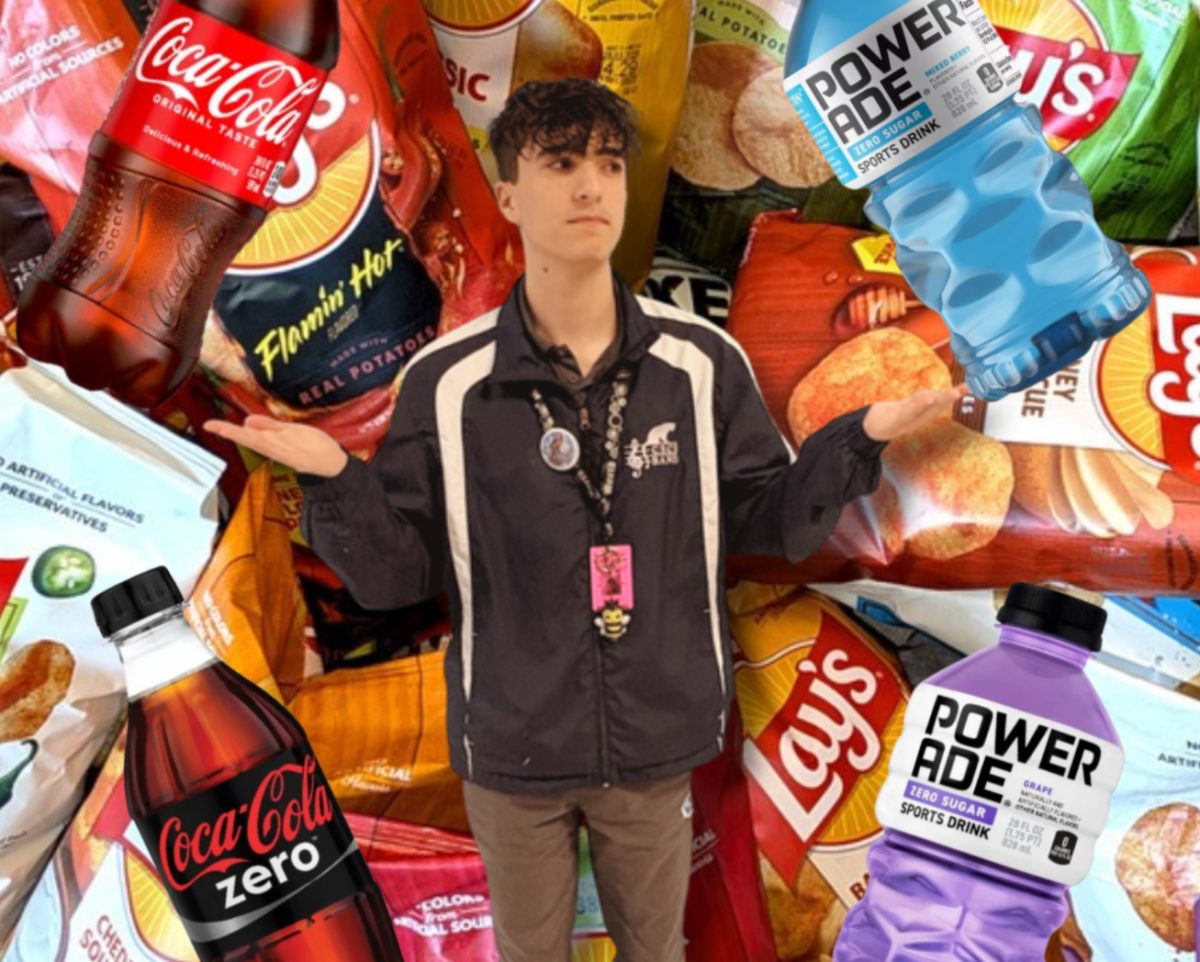
Almost every day at lunch, our school cafeteria provides a wide variety of snacks and drinks, ranging from bags of Doritos and Lays to bottles of Coke and Powerade.
On the surface, these items offer a quick and tasty way to refuel between classes, but their constant availability carries hidden drawbacks that extend far beyond a simple midday snack. Beneath the bright packaging lies a complex set of risks that can impact a student’s well-being and academic performance long after the lunch period ends.
The health risks associated with these products are well-documented. According to a review published in the British Medical Journal (BMJ) in 2024, high exposure to ultra-processed foods is linked to many health problems, such as an increased risk of cardiovascular disease and metabolic disorders. A single serving of soda or a sports drink can already exceed the daily recommended limit of 25 grams of added sugar for teenagers. Frequently consuming these products can contribute to long-term health issues such as pediatric obesity and hypertension.
Beyond physical wellness, snacks and drinks can also impact performance in the classroom. High-sugar products cause rapid spikes and crashes in blood glucose levels, which often results in fatigue and decreased focus during afternoon class periods. Research shows that students who regularly consume nutrient-poor junk food have lower GPAs and reduced short-term memory capacity compared to the ones who don't. These "brain fog" episodes undermine the effectiveness of the instruction provided in the latter half of the school day.
Although these snacks and drinks can cause problems, there are alternatives that provide the "crunch" and flavor without all the harmful stuff. Air-popped popcorn, roasted chickpeas, and baked veggie straws offer fiber and protein that can help stabilize energy levels. Similarly, replacing sodas with fruit-infused sparkling water or prebiotic-rich beverages can provide hydration without the massive sugar load. Making these changes can allow for a cafeteria environment that aligns with the developmental needs of the students it serves.
Ultimately, the decision to provide these items can really affect the overall educational atmosphere. As federal nutrition standards begin to tighten in 2026, many institutions are already transitioning away from "empty calorie" sales. Prioritizing nutrient-dense options can help make sure that the cafeteria remains a space that supports student success and long-term health rather than compromising it for short-term convenience.