
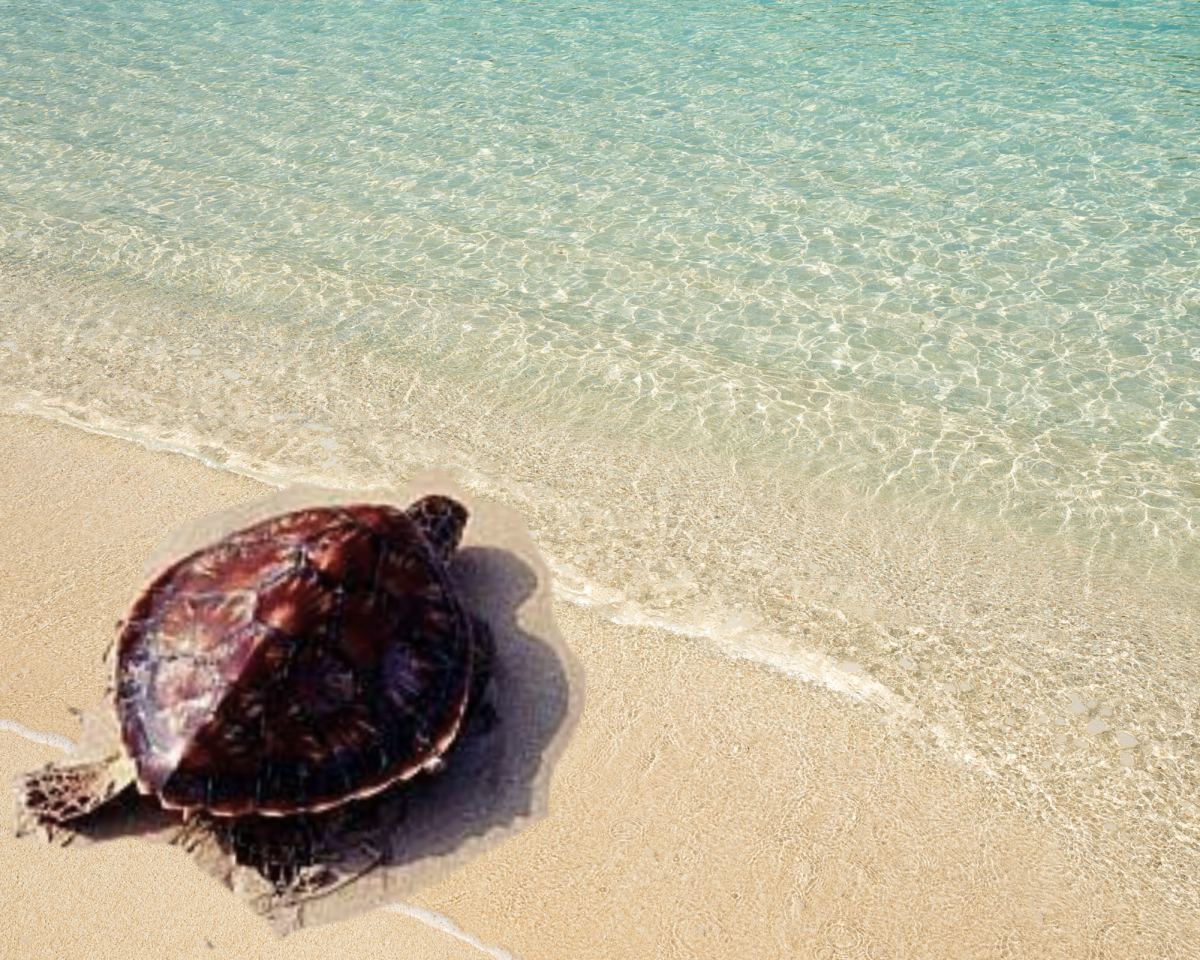
The International Union for Conservation of Nature (ICUN) has released that green sea turtles are now a “Least Concern” as of late 2025. The years of dedication of coordinated global action has allowed populations to increase from dying out.
Recent data shows that the global population of green sea turtles has increased 28% since the 1970s. The recovery of this species is attributed to three major things; strict protection of nesting beaches, the implementation of international trade bans, and advancements in fishing technology. The widespread use of Turtle Excluder Devices (TEDs) in commercial fishing nets has largely reduced “bycatch”- the accidental drowning of turtles in gear meant for fish.
Furthermore, local community programs in Hawaii, Brazil, and the Cayman islands, where people used to hunt turtles or collect their eggs have now given in efforts to save them. “Im so happy to hear the progress of green sea turtles increasing in population” said junior Rosmy Jose. Instead of hunting, these community members are hired as conservation guards. They spend their time watching over nesting beaches to make sure that baby turtles can hatch and reach the water without being harmed.
However, marine biologists emphasize that recovery is not uniform. While some populations are thriving and expanding, others in the North Indian and Pacific Oceans remain vulnerable. Also, climate change is a modern threat that previous generations did not face. Rising sand temperatures can change the gender of hatchlings, as warmer nests produce more females, potentially leading to a population imbalance. Rising sea levels also may wash away the beaches these turtles have used for nesting for thousands of years.
These creatures no longer being endangered proves that when countries work together for a long time to protect different species, nature can recover. “I think it’s great that green sea turtles are more populated now and healthier than ever,” said junior Samiha Shahrin. While we still need to watch out for new problems like climate change, this success gives scientists hope that we can save other animals too.