
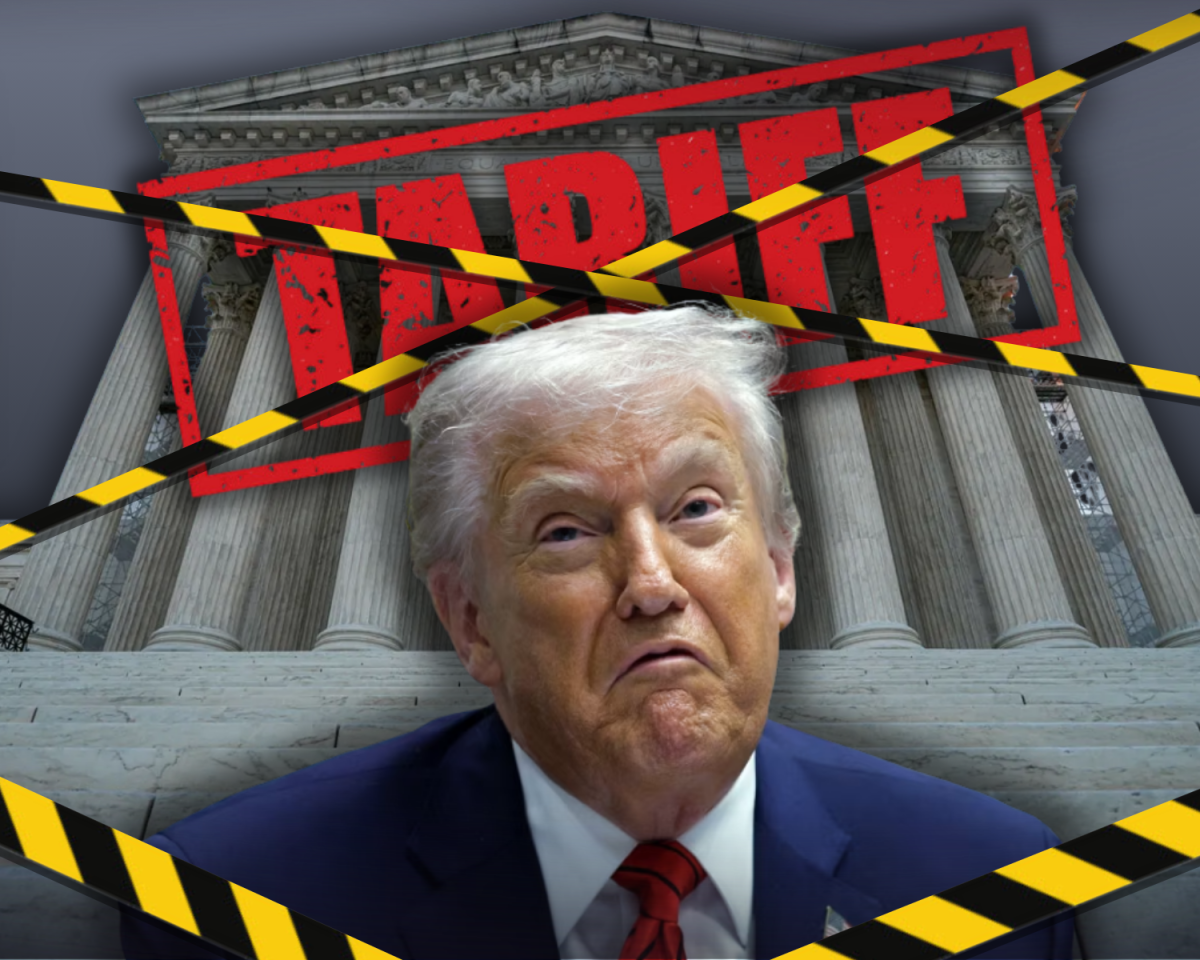
On Feb. 20, the United States Supreme Court ruled 6-3 that President Donald Trump’s broad tariffs under the International Emergency Economic Powers Act, or IEEPA, were not allowed by law. The Supreme Court said that Trump didn’t have the legal authority to create those tariffs under the law his administration used.
The decision was a major setback on Trump’s trade policy. Trump said before that the tariffs were meant to deal with issues such as trade imbalances and trafficking fentanyl, but the judiciary decided that the IEEPA did not give him the power to do so, and instead the ruling made it clear that the tariffs like these have to get approved through Congress.
The case became bigger than just a trade issue since it also turned into a debate over presidential power. It raised questions about how far a president could go while using emergency laws. However, the Supreme Court showed that emergency powers still have limits.
Even though the ruling blocked these tariffs, it did not get rid of every tariff that was already in place. It only applies to the ones created under IEEPA. Other tariffs under different laws weren’t affected by the Court’s ruling.
The ruling also raised questions about what is going to happen next. Since the tariffs were taken down, theres uncertainty about how Trump’s administration will respond and whether or not other legal methods could be used to keep similar tariffs. The case is important as it is an example of limits on presidential power on trading policies.
Overall, the case stands as an important decision about trade and executive power. Even though the tariffs were the main issue, the ruling also made it clear that the president can’t act alone in something the Constitution gives to congress.


